
Dementia Care at Home vs. Memory Care: How to Decide
Families facing progressing dementia wrestle with whether to keep care at home or move to a memory care facility. This guide walks through the real trade-offs.
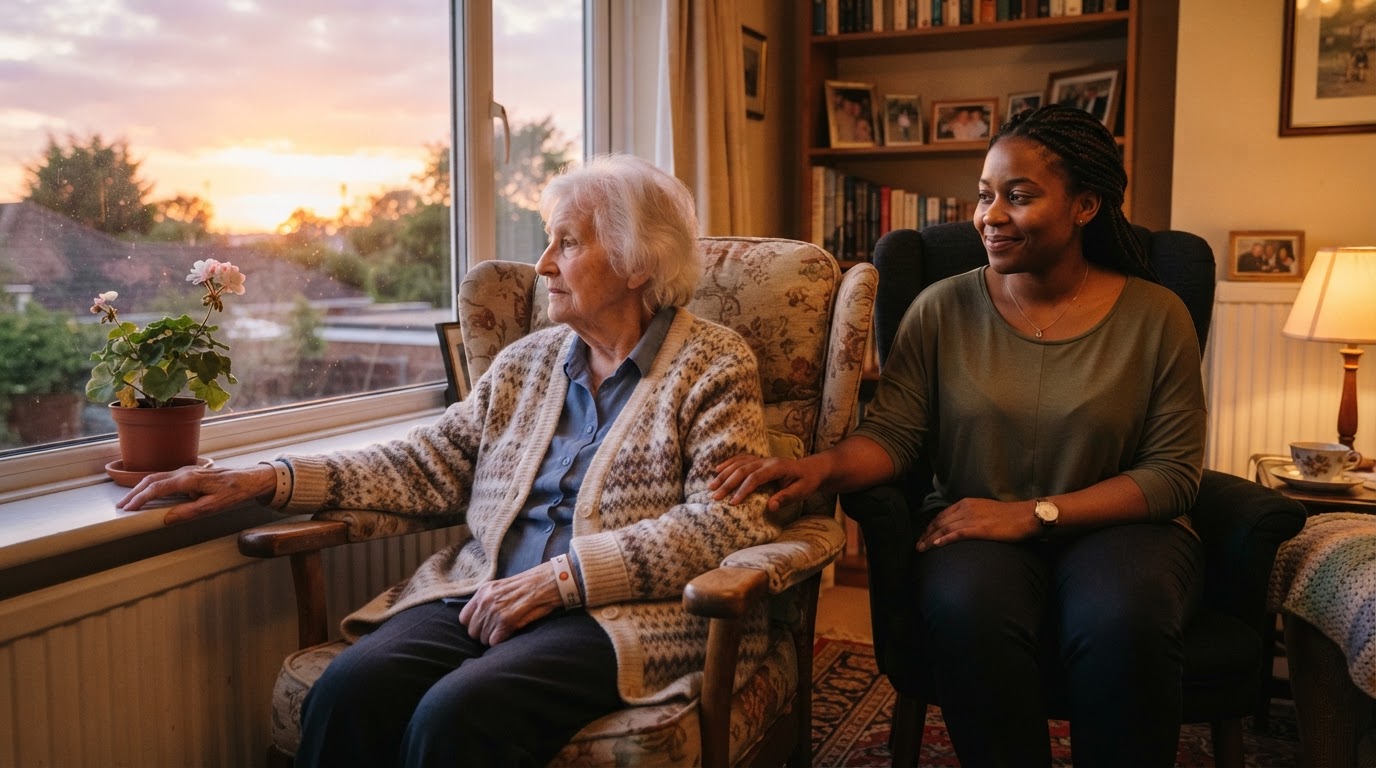
Few decisions in dementia caregiving feel heavier than the choice between keeping your loved one at home and moving them to a memory care facility. There is no universally right answer, and there is no single moment when the decision becomes obvious. What there is, instead, is a steady weighing of safety, dignity, cost, and the toll on the people doing the caring. This guide is written to help families in Puyallup and across Pierce County think through that weighing clearly, without guilt and without pressure.
Start with where your loved one is now
Dementia is progressive, but it moves in stages, and the right level of care depends on the stage your loved one is in today, not the one you fear tomorrow. In the early and middle stages, many people do well at home with the right structure: consistent routines, a safe environment, a familiar caregiver, and increasing support as needs change. The question of a facility usually becomes serious when care at home can no longer keep someone safe, or when the family caregiver's own health is breaking down.
- Early stage: occasional forgetfulness, manageable with reminders, routine, and light support. Home is usually the best fit.
- Middle stage: help with daily activities, supervision for safety, and management of behaviors like wandering or sundowning. Home can still work with skilled in-home support and respite.
- Late stage: round-the-clock needs, significant medical complexity, and high fall risk. Some families continue at home with extensive care; others find a facility better meets the need.
What home-based dementia care does well
The greatest strength of in-home dementia care is familiarity. Dementia strips away the ability to process new environments, which is why moves to a facility often trigger a sharp decline in the first weeks. At home, your loved one keeps the layout they know, the bedroom they recognize, and the faces of family nearby. Consistent, trained caregivers can build a routine around their habits rather than around an institution's schedule, and that predictability lowers agitation.
- Familiar surroundings reduce confusion, anxiety, and the agitation that new environments can trigger.
- One-on-one attention from a consistent caregiver is hard to match in a group setting.
- Care scales to exactly what is needed, from a few visits a week to comprehensive daily support.
- Family stays close and involved, which supports emotional connection and oversight.
Familiarity is not just a comfort. For someone with dementia, a known environment is a clinical safety measure that lowers agitation, wandering, and distress.
What a memory care facility does well
A memory care facility is a dedicated, secured environment designed for people with significant dementia. It offers 24-hour staffing, secured exits to prevent wandering, structured programming, and the ability to handle medical needs that exceed what most families can manage at home. For families whose loved one needs constant supervision, has become unsafe at home despite support, or whose caregiver is no longer able to continue, a facility can be the right and caring choice.
- Secured, purpose-built environments that reduce wandering and elopement risk.
- 24-hour staffing and the capacity to manage complex medical and behavioral needs.
- Structured daily programming designed for cognitive engagement.
- Relief for family caregivers whose own health or capacity can no longer sustain home care.
The honest cost comparison
Cost is one of the hardest parts of this decision, and the numbers do not always point the way families expect. A facility is a fixed monthly cost, often substantial, regardless of how much care the resident needs on a given day. In-home care scales: a few visits a week costs far less than a facility, while comprehensive round-the-clock home care can cost more. When Medicare covers a skilled home health episode after a hospitalization, the out-of-pocket cost to the family can be very low for that period.
The trade-off is not only financial. It is also about flexibility, control, and the ability to adjust as needs change. Home care lets you add hours, add services, or pause them; a facility is a more all-or-nothing commitment. For many families, the most affordable path is a hybrid: in-home support that keeps the loved one at home for as long as it is safe, with the understanding that a facility remains an option if needs eventually exceed what home can provide.
Signs it may be time to consider a facility
No single sign means a move is necessary, but a cluster of them is worth taking seriously. These are signals that the balance between safety, dignity, and the caregiver's capacity is shifting.
- Repeated wandering or exit-seeking that cannot be made safe at home despite modifications.
- Frequent falls or injuries that home supervision cannot reliably prevent.
- Behaviors, such as aggression, that put the caregiver or the loved one at risk.
- A family caregiver who is physically or mentally exhausted and has no realistic respite or support.
- Medical needs, such as skilled nursing around the clock, that exceed what in-home care can reasonably provide.
A middle path many families choose
The decision does not have to be all or nothing, and it does not have to be permanent. Many families start with in-home dementia care, add respite so the primary caregiver can rest, and reassess every few months. If safety at home can be maintained and the caregiver is supported, staying home is often the preference. If the situation changes, the option to move remains open, and the care plan can be adjusted without guilt.
If you are weighing this decision, a free consultation with our care team can help you look at your loved one's current stage, the home environment, and your family's capacity honestly. We help families decide what fits now and plan for how to adjust later. Call (253) 348-6004 to talk it through.
Questions families ask about home vs. memory care
How long can someone with dementia stay at home?
It depends on the stage, the home's safety, and the support available. With consistent in-home care, a safe environment, and respite for the family caregiver, many people remain at home through the middle stage and sometimes longer. We reassess regularly so the plan changes as needs do.
Is home dementia care cheaper than a memory care facility?
Often yes at lower levels of care, because home care scales to exactly what is needed. A few visits a week costs far less than a facility. At very high, around-the-clock levels, the costs can be similar. When Medicare covers a skilled episode after hospitalization, home care may cost the family very little for that period.
What if my loved one wanders?
Wandering is a serious safety concern. Home modifications, secured doors, supervision, and trained caregivers can manage wandering for many families. If wandering cannot be made safe at home despite these measures, a secured memory care environment may be the safer choice, and we help families weigh that honestly.
Will moving to a facility make my loved one worse?
A move to an unfamiliar environment can cause a temporary decline in confusion or agitation, which is why we generally support staying home as long as it is safe. If a move becomes necessary, a gradual transition, familiar objects, and family presence can ease the adjustment.
Can we start at home and move to a facility later?
Yes, and many families do exactly that. In-home care is not a permanent commitment. We help families keep a loved one at home for as long as it is safe, with the understanding that a facility remains an option if needs eventually exceed what home can provide.
How do I get help deciding?
Call (253) 348-6004 for a free consultation. We look at your loved one's current stage, the home environment, and your family's capacity, and help you build a plan that fits now and can adjust later, with no obligation.
Related service
Dementia & Alzheimer's CareLearn how this service can help your family, or call (253) 348-6004 for a free consultation.
Medically reviewed by a Blooming Beacon Registered Nurse (RN)
Last reviewed October 9, 2026. This article is for general education and is not a substitute for medical advice. For care specific to your loved one, call (253) 348-6004.
Blooming Beacon Care Team
The Blooming Beacon Care Team includes registered nurses, licensed practical nurses, and certified caregivers dedicated to helping families navigate home health care with confidence and compassion. Every article is written to be practical, honest, and grounded in the real needs of families across Pierce and South King County.